
Nutrition Myths Simplified
Nutrition can feel confusing because many “rules” were shaped by incomplete science, marketing, and oversimplified advice. This page breaks down common nutrition myths in a simple, practical way so you can better understand energy, insulin, inflammation, metabolic flexibility, and long-term wellness.
Educational content only. Always consult a qualified professional for personal medical concerns.
Six Common Beliefs. A Simpler Perspective.
Nutrition becomes less confusing when we stop chasing headlines and start understanding how the body responds to food, energy, timing, and lifestyle.
Click any myth below to learn more.
|
Fat & Energy
Fat loss and energy are not controlled by one single thing. Calories matter, but your body also responds to hormones, insulin, food quality, protein, sleep, stress, movement, and how often you eat.
Your body responds to more than calories alone — context and lifestyle matter too.
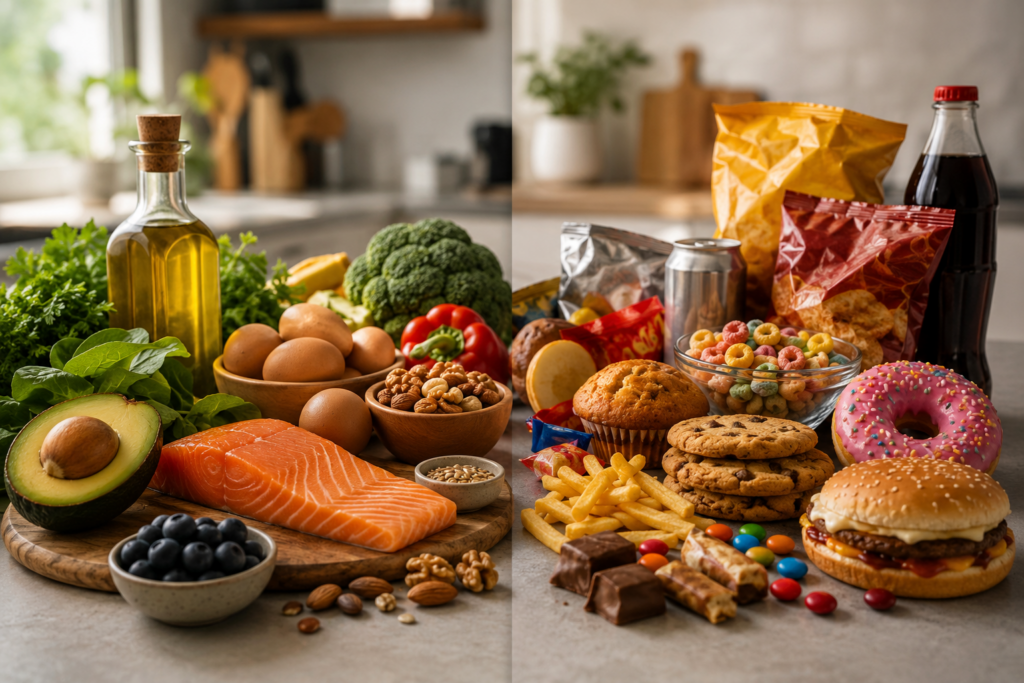
Myth 1 Eating Fat Makes You FatBody fat gain is more complex than eating fat alone. Insulin, food quality, sleep, movement, and overall lifestyle and metabolism matter too. Dietary fat does not automatically become body fat. Natural fats from whole foods can support satiety, hormone production, and steady energy. The bigger issue is often the combination of refined carbohydrates, ultra-processed foods, frequent snacking, poor sleep, stress, and insulin staying high too often. Key idea: real food fats are very different from processed foods designed to make you overeat. | Myth 2 Calories Are the Only Thing That MattersCalories matter, but hormones, protein, stress, muscle mass, sleep, and food quality also influence metabolism. Calories do matter, but they do not explain everything. A 500-calorie meal of eggs and avocado affects hunger, blood sugar, hormones, and fullness differently than 500 calories of cookies or sugary cereal. Protein, fiber, muscle mass, sleep, stress, and food quality all influence how your body uses energy. Key idea: calories count, but your body is not just a calculator — it is a living system responding to signals. |
Cholesterol & Processed Oils
Heart health is influenced by more than one cholesterol number or one type of fat. Food quality, inflammation, insulin resistance, lifestyle habits, and processed foods all help shape the bigger metabolic picture.
Food context matters more than simple “good” or “bad” labels.
|
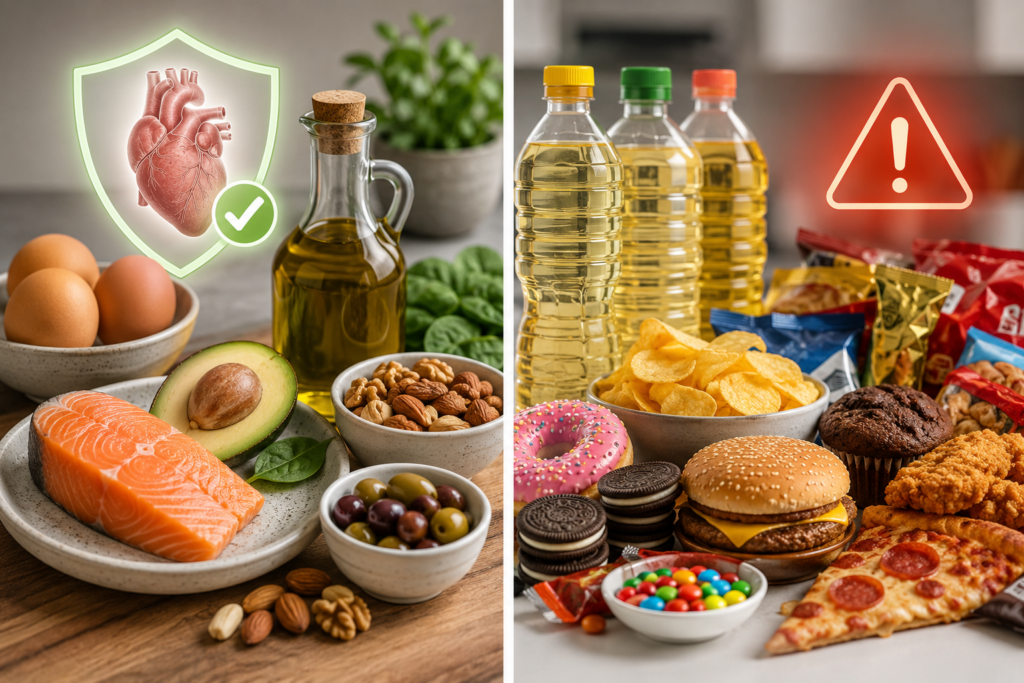
Myth 3 Cholesterol Is Always DangerousCholesterol is essential for hormones, brain function, cell membranes, and many important processes in the body. Looking at one isolated cholesterol number rarely tells the full story. Inflammation, triglycerides, insulin resistance, blood sugar control, lifestyle habits, and overall metabolic health also matter. High LDL cholesterol can still matter, especially alongside inflammation, smoking, high blood pressure, insulin resistance, or family risk. Key idea: cholesterol alone does not tell the full story — context and overall metabolic health matter too. |
Myth 4 Processed Seed Oils & HealthNot all oils are equal. Food quality, processing, and cooking methods may influence inflammation and metabolic health. Highly refined industrial oils are now common in ultra-processed foods and restaurant meals. Frequent exposure to heavily processed products, especially alongside excess sugar and poor lifestyle habits, may negatively affect metabolic health. Whole-food fat sources such as olive oil, avocado, nuts, eggs, and fatty fish are very different nutritionally from processed fast-food oils. Key idea: food quality and processing matter more than simplistic labels like “healthy” or “unhealthy.” |
Meal Timing & Energy
When you eat matters, but there is no perfect schedule for everyone. Hunger, energy, insulin, sleep, stress, activity, and meal quality all influence how your body responds to food timing.
Consistency matters more than chasing the “perfect” eating schedule.
|
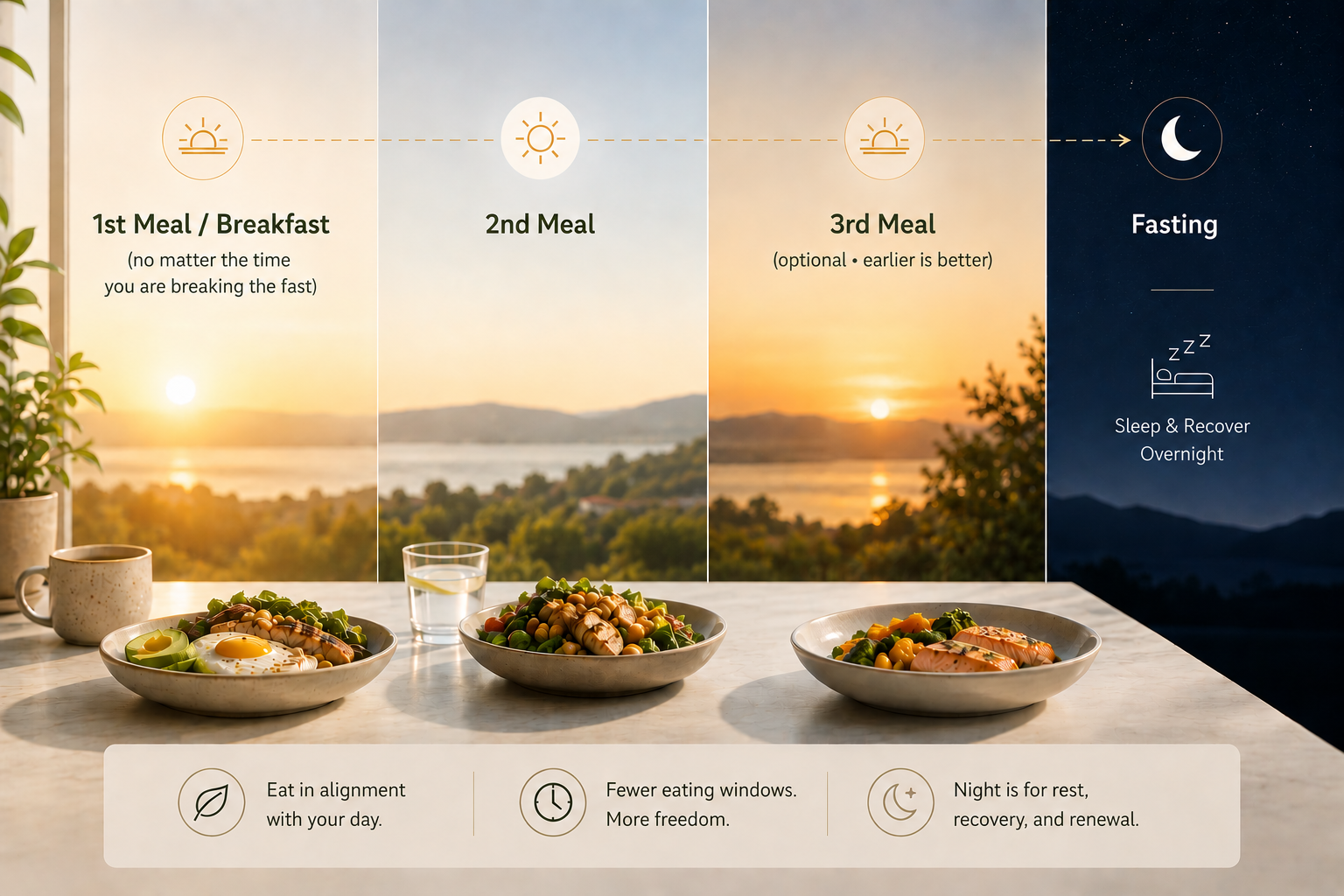
Myth 5 Breakfast Is MandatoryBreakfast is optional. What matters more is how your first meal supports energy, hunger, and blood sugar stability. Some people feel their best with a nourishing breakfast, while others feel better with a longer overnight fasting window. The goal is not to force a rule, but to notice your body’s signals. A first meal built around protein, natural fats, and whole foods will usually support steadier energy better than a sugary or highly processed breakfast. Key idea: your first meal matters more than the clock. |
Myth 6 You Need to Eat Every 2–3 HoursConstant snacking is not required. Fewer eating windows may support steadier energy and metabolic flexibility. Every time you eat, your body receives a metabolic signal. For many people, eating balanced meals and reducing constant grazing can help improve appetite awareness and give the body more time between large blood sugar and insulin swings. This does not mean extreme fasting is necessary; it simply means you do not need to eat all day to keep your metabolism working. Key idea: fewer, better meals often beat constant grazing. |

Sources
This platform is built on evidence-based research and trusted sources.
- Kearns, C.E. et al. “Sugar Industry and Coronary Heart Disease Research.” JAMA Internal Medicine 176(11):1680–1685 (2016)
- Chowdhury, R. et al. “Association of Dietary, Circulating, and Supplement Fatty Acids With Coronary Risk.” Annals of Internal Medicine 160(6):398–406 (2014)
- Siri-Tarino, P.W. et al. “Meta-analysis of Prospective Cohort Studies Evaluating the Association of Saturated Fat with Cardiovascular Disease.” American Journal of Clinical Nutrition (2010)
- Astrup, A. et al. “Saturated Fats and Health: A Reassessment and Proposal for Food-Based Recommendations.” Journal of the American College of Cardiology (2020)
- DiNicolantonio, J.J. “The cardiometabolic consequences of replacing saturated fats with carbohydrates.” Open Heart 1(1):e000032 (2014)
- Ludwig, D.S. et al. “Dietary Fat: From Foe to Friend?” Science (2018)
- Taubes, G. “Good Calories, Bad Calories.” Anchor Books (2007)
- Fung, J. “The Obesity Code.” Greystone Books (2016)
- Stro, R. & Stro, C. “Dieta Cetogénica / Alimentación Efectiva.” (2019)